~ the story ~
Soils. People.
Vineyard Rows.
Three things that make Du Sol Wines what it is. This is where the story begins — and ends — every year.
Home › Our Story
~ where it begins ~
A piece of South African land that refuses to be ordinary.
Tucked into [Region], [Location], South Africa, the Du Sol vineyard sits at the point where the land starts to climb — where the soils change, where the wind comes in off the mountain, and where something in the air tells you this is a place worth paying attention to.
We didn't choose this land because it was convenient. We chose it because of what it was capable of. Every row of vines here is an argument for a particular kind of wine — one grown from a specific place, in a specific season, by specific hands. Du Sol — of the soil. That's not just a name. It's an obligation.
~ chapter one ~
The Soils
Great wine is made underground, long before harvest. It is made in the relationship between vine roots and soil — in the minerals, the drainage, the chemistry of the earth that the plant draws from season after season.
At Du Sol, the soils are not uniform. They shift across the farm — from the upper slopes to the valley floor — and that variation is exactly what we farm. Different soils produce different expressions. We don't fight that. We lean into it.
Decomposed Granite
Free-draining and mineral-rich, granite soils force vine roots deep into the earth — stressing the plant just enough to concentrate flavour and intensify character in every grape.
Shale & Clay
Where the granite gives way to shale, the soil retains moisture through the dry summer months — giving our vines resilience and adding a distinctive savouriness to the wine.
Alluvial Loam
Along the lower reaches of the vineyard, ancient river deposits provide a deep, fertile base — producing grapes with natural richness and generous, fruit-forward expression.
~ the land speaks ~
"You don't really understand a wine until you've stood in the row where it was grown — in the wind, in the heat, in the silence."
— Solly, Founder of Du Sol Wines
~ chapter two ~
The Vineyard Rows
The rows run [North–South / East–West — confirm orientation] across [X] hectares. Each one has been planted, trained, and pruned by hand. That's not romanticism — it's the only way to understand what each vine is doing, what it needs, and when it's ready to give.
Walking the rows at sunrise during harvest is one of the few things in winemaking that doesn't get easier with experience. There is still a nervousness. A reverence. The grapes don't care about your plans — they're ready when they're ready, and your job is to be there.
We grow [Sauvignon Blanc, Shiraz, Merlot — confirm varieties and add any others]. Each variety sits in the block of soil that suits it best — placed there deliberately, after years of watching and listening to what the land was telling us.
~ the year in the rows ~
Four Seasons. One Wine.
June – August
Winter
The vines rest. Rain fills the dams. We prune each row by hand — a slow, considered act that sets the shape of the season ahead.
September – November
Spring
Budburst. The vineyard wakes up overnight. Green shoots push through gnarled wood and the rows fill with possibility. We watch carefully — frost is still a threat.
December – February
Summer
Long days, warm afternoons, cool nights. The Cape's Mediterranean climate does what no winemaker can — it builds complexity slowly, unhurried, in the canopy.
March – May
Harvest
The most important weeks of the year. Every grape picked by hand at the right moment — not the calendar, not the clock. When it's ready, we move.
~ chapter three ~
The People
Du Sol Wines is a small operation — intentionally so. The people behind it know every row, every vine, every vintage by name.
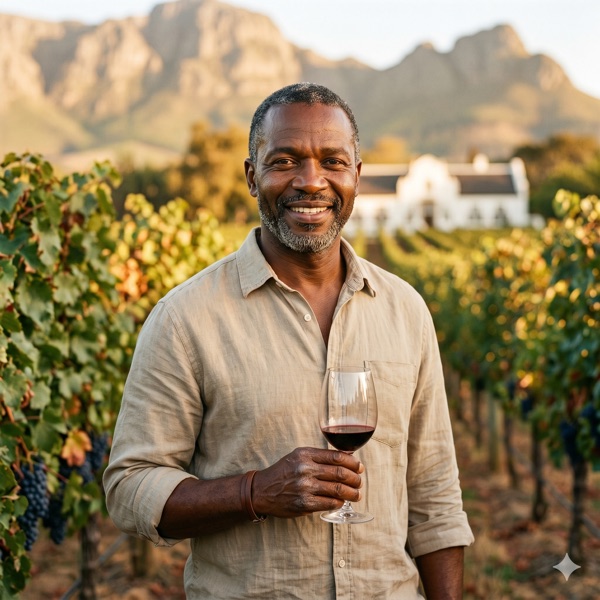
Solly
Founder & Winemaker
"I don't make the wine. The soil does. I just try not to get in the way."
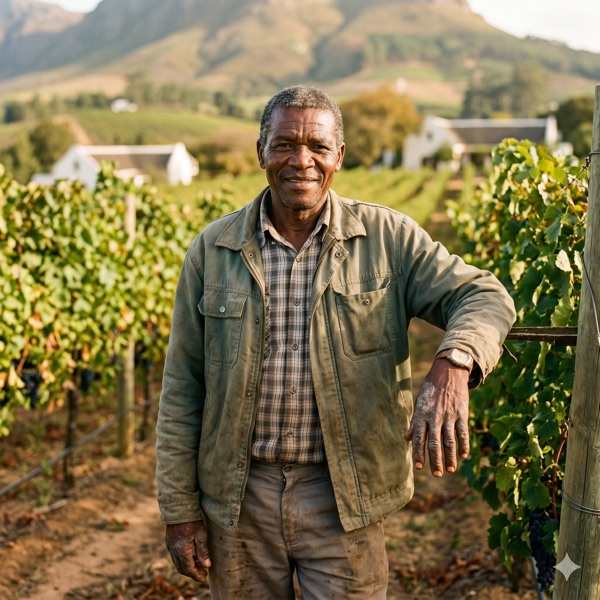
Stanley
Vineyard Partner
"Every row tells you something different. You have to walk them to understand."
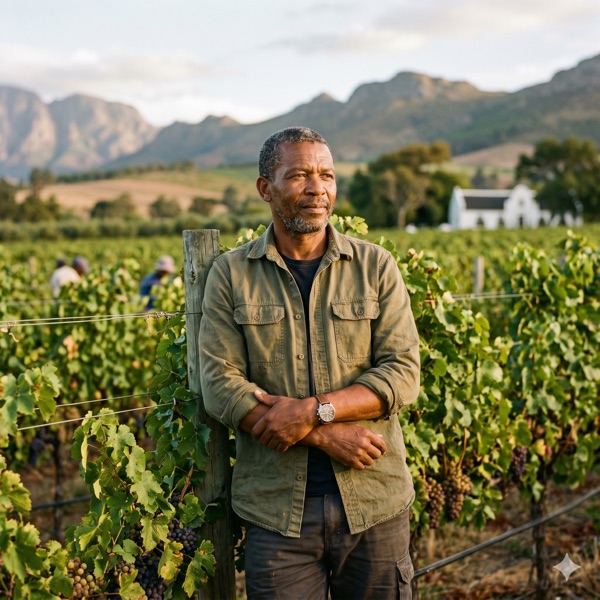
Bertus
Vineyard Partner
"The best decisions in the vineyard are the ones you make slowly."
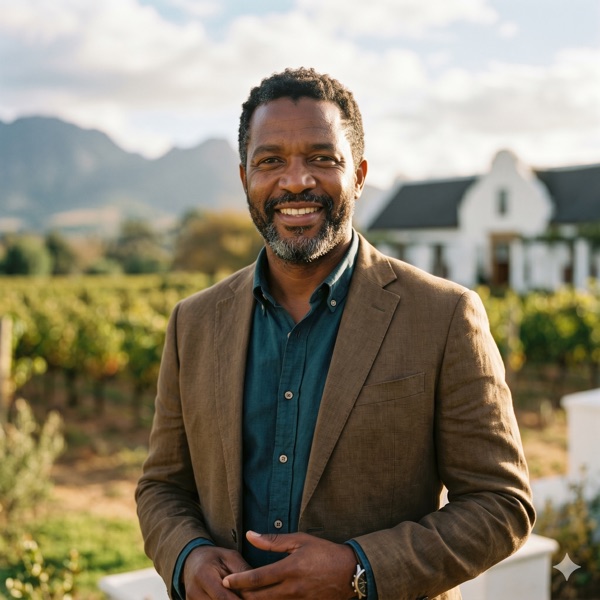
Laurensford
Partner
"What we do here is bigger than any single bottle. It's about the land, the people, the future."